
Patient Resources
Get Healthy!
Turns Out Horses Don’t Just Whinny — They Whistle
- February 24, 2026
- I. Edwards HealthDay Reporter
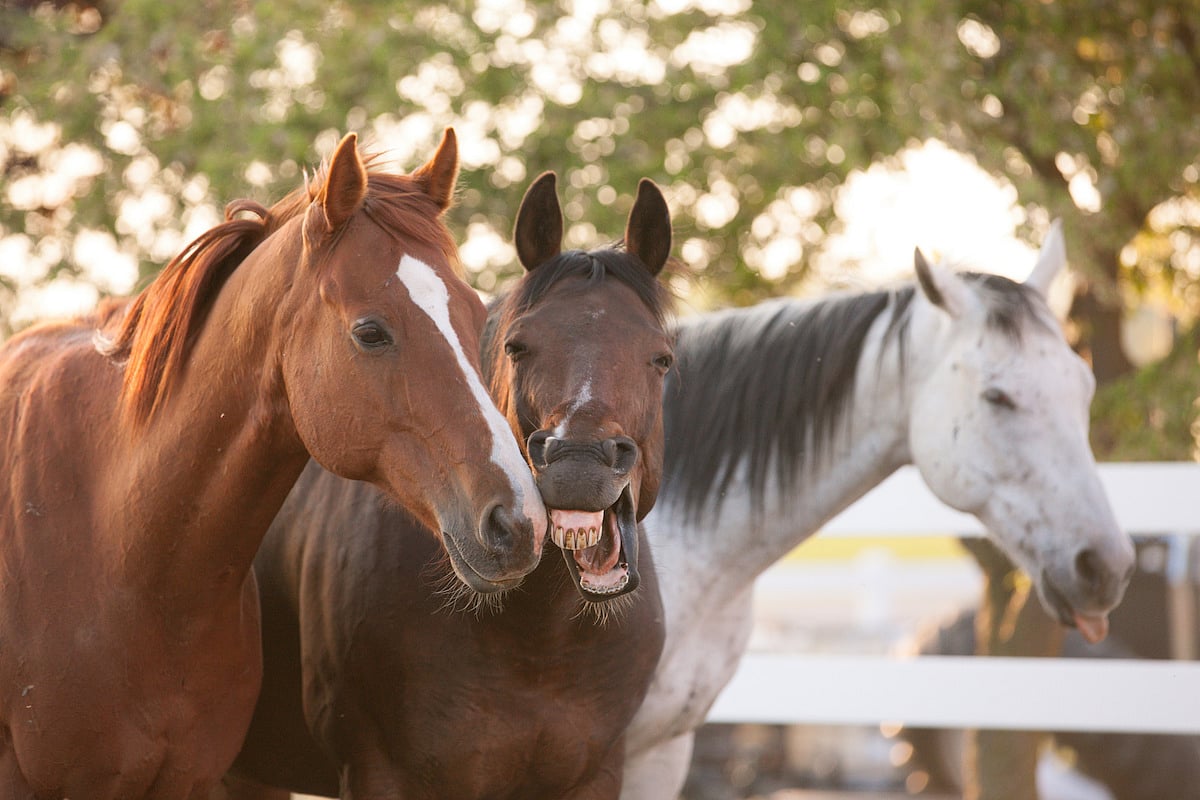
TUESDAY, Feb. 24, 2026 (HealthDay News) — The sound of a horse whinnying is one most people recognize instantly, but scientists are only now learning how it’s made.
A new study revealed that when a horse whinnies, it is making two sounds at the same time: One sound comes from vibrating vocal cords, like when people sing. The other comes from air rushing through the voice box, just like a whistle.
The research was published Monday in the journal Current Biology.
“Horses have been domesticated over 4,000 years, and somehow we still didn’t know till now how they make sounds,” senior author Elodie Briefer told The New York Times. She’s an associate professor of biology at the University of Copenhagen, in Denmark.
A horse’s voice box, also called the larynx, sits in the throat and helps produce sound when air passes through it. In most animals, larger bodies mean deeper sounds. But horses are large animals with surprisingly high-pitched whinnies.
More than a decade ago, Briefer noticed something unusual while studying sound recordings of horses. She saw two sound frequencies happening at once: One high and one low.
“Everyone thought that horses were making frequencies that were much higher than predicted by the body size,” Briefer said. “They hadn’t realized that actually below that high pitch, there is a low pitch.”
Some scientists were skeptical. So Briefer and her team decided to prove exactly how the sounds were made.
First, they used tiny cameras to look inside horses’ throats while they made sounds. When horses produced low-pitched sounds, their vocal cords vibrated, just like humans’ do when they sing. But when they made high-pitched sounds, the vocal cords didn’t move at all.
Next, researchers built a lab setup that could mimic the process of a whinny — and then pushed air through it. Again, they saw that the high sound came from air rushing through the larynx, not from vibrating vocal folds.
To confirm this, they tried something unusual: Helium.
When helium was pushed through the voice box, the high-pitched sound became much higher. That only happens with sounds made by whistling air and not vibrating cords.
“The frequency went way up,” senior author Tecumseh Fitch told The Times. He’s a professor of cognitive biology at the University of Vienna, in Austria.
This kind of whistling sound has been seen before in small animals like rodents, but this is the first time it’s been observed in a large animal.
Experts say the discovery could help scientists better understand how horses communicate — and what different sounds mean.
“This is going to be a landmark paper in terms of stimulating research into vocalizations in equids,” said Sue McDonnell, a veterinary professor at the University of Pennsylvania who reviewed the findings.
“Most of the vocalizations that you hear under domestic situations are stress vocalizations,” she added.
Learning the differences between sounds like whinnies, neighs and squeals could help improve horse care and well-being, McDonnell said.
“It’d be really good if [people who work with horses] knew what these horses were trying to say,” she said.
More information
The Open Sanctuary Project has a full glossary of horse vocalizations and sounds.
SOURCE: The New York Times, Feb. 23, 2026
